Focused low-level laser light works at the cellular level to enhance energy production, support tissue repair, and promote the body's innate ability to heal.
.avif)
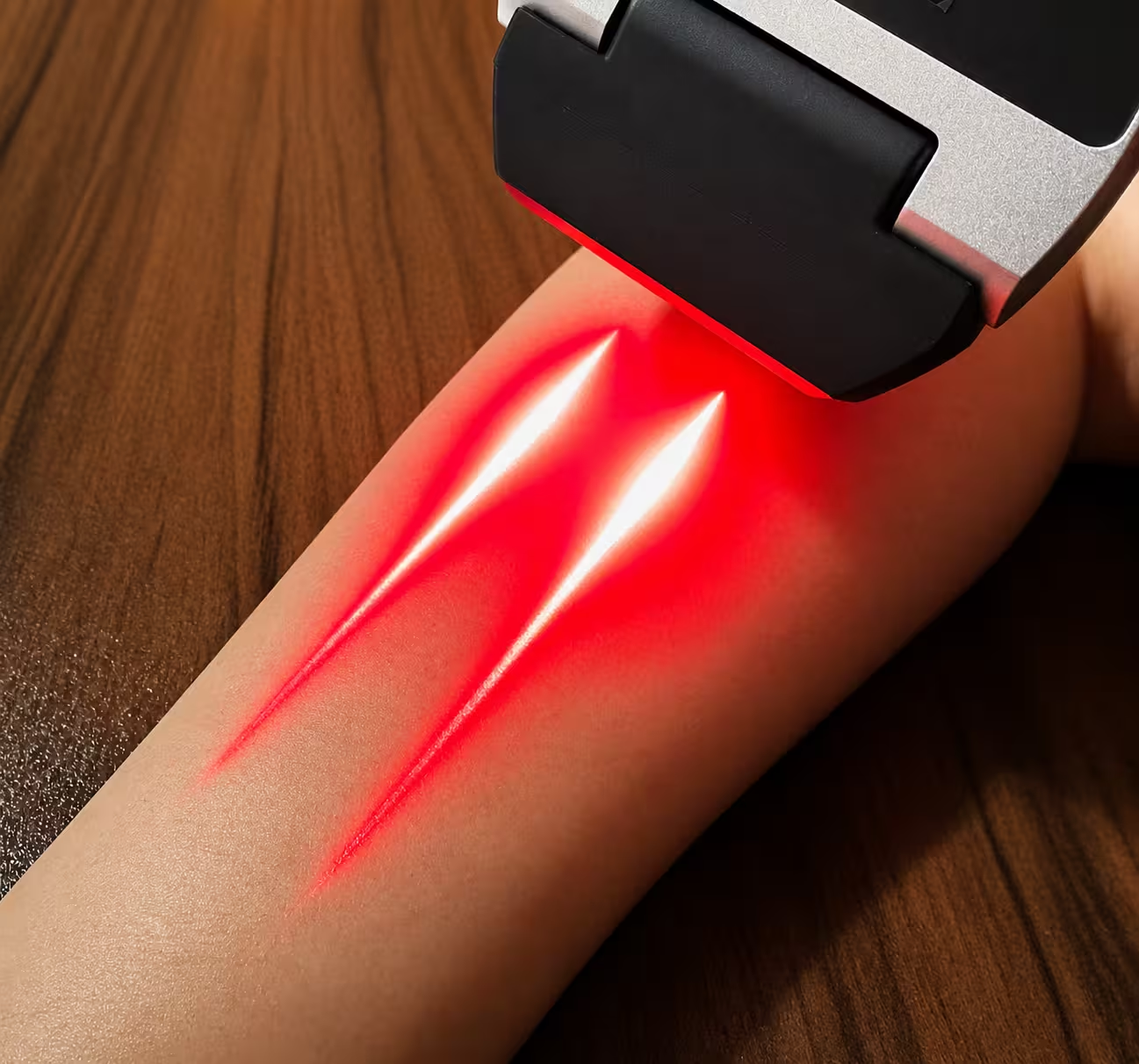
Low-Level Laser Therapy (LLLT), also known as photobiomodulation, is a non-invasive therapeutic modality that uses specific wavelengths of laser light to stimulate cellular function, promote tissue repair, and support the body's natural healing processes. Unlike surgical or high-powered lasers that cut or destroy tissue, low-level lasers deliver light energy at intensities designed to encourage biological activity without generating tissue damage or significant heat.
Today, photobiomodulation is used throughout medicine, sports rehabilitation, pain management, wound care, orthopedics, and integrative healthcare because of its ability to influence healing at the cellular level.
The origins of low-level laser therapy can be traced back to the 1960s, shortly after the invention of the first medical lasers. Hungarian physician and researcher Dr. Endre Mester observed that low-powered laser exposure appeared to accelerate wound healing and hair growth in laboratory animals, despite not generating enough energy to damage tissue. These observations laid the foundation for what would later become known as Low-Level Laser Therapy and, more recently, photobiomodulation.
Over the following decades, researchers explored the biological effects of therapeutic laser light and discovered that specific wavelengths could influence cellular metabolism, tissue repair mechanisms, and inflammatory processes. As the scientific understanding of these effects expanded, photobiomodulation became an increasingly studied and utilized treatment option in both conventional and integrative medicine.
At its core, photobiomodulation is a method of delivering energy directly to cells in the form of light.
Specific wavelengths of laser light penetrate the skin and are absorbed by structures within the cell, particularly the mitochondria. The mitochondria are often referred to as the "powerhouses" of the cell because they produce adenosine triphosphate (ATP), the primary energy currency used throughout the body.
Research suggests that laser light interacts with mitochondrial enzymes, especially cytochrome c oxidase, resulting in changes that can enhance cellular energy production and improve cellular function. These effects may include:
Rather than forcing the body to heal, photobiomodulation provides cells with additional energy and signaling support, helping physiological repair processes occur more efficiently.
One of the most well-studied aspects of low-level laser therapy is its impact on inflammation and tissue healing.
Following injury, the body initiates a complex cascade involving inflammatory mediators, immune cells, blood flow changes, and tissue repair mechanisms. While inflammation is a normal part of healing, prolonged or excessive inflammation can interfere with recovery and contribute to ongoing pain and dysfunction.
Photobiomodulation has been shown to influence inflammatory signaling pathways while simultaneously supporting tissue regeneration. Through these mechanisms, laser therapy may help facilitate recovery of muscles, tendons, ligaments, nerves, and other soft tissues.
These effects have led to widespread use in sports medicine, rehabilitation settings, and musculoskeletal healthcare.
Low-level laser therapy has been extensively studied for several decades and continues to be an active area of research.
Scientific literature has demonstrated biological effects on cellular energy production, wound healing, tissue repair, inflammation, and neuromuscular recovery. Researchers have observed measurable changes in ATP production, cellular signaling pathways, growth factor expression, and tissue regeneration following appropriately applied photobiomodulation treatments.
Research has been conducted across a variety of applications, including:
While outcomes vary depending on the condition being treated and the treatment parameters used, the growing body of evidence continues to support photobiomodulation as a valuable tool within a comprehensive treatment plan.
Low-level laser therapy may be incorporated into treatment plans for a variety of conditions, including:
Because laser therapy works by supporting fundamental cellular processes, its applications often extend across multiple body systems and tissue types.
Low-level laser therapy is a comfortable, non-invasive treatment that can easily be incorporated into a broader treatment plan.
During treatment, the laser is applied directly over the area being treated. Most patients feel little to nothing during the procedure, although some notice a mild sensation of warmth. Treatments are typically brief and require no downtime afterward.
In our office, photobiomodulation is combined with physical medicine, rehabilitation strategies, nutritional support, and other therapies to create a comprehensive treatment plan tailored to the patient's needs.
By supporting healing at the cellular level, low-level laser therapy provides another tool for helping the body recover, repair, and function at its highest potential.