Based on the principle of "like cures like," homeopathy works with the body's innate healing intelligence to address underlying patterns of imbalance rather than simply managing symptoms.
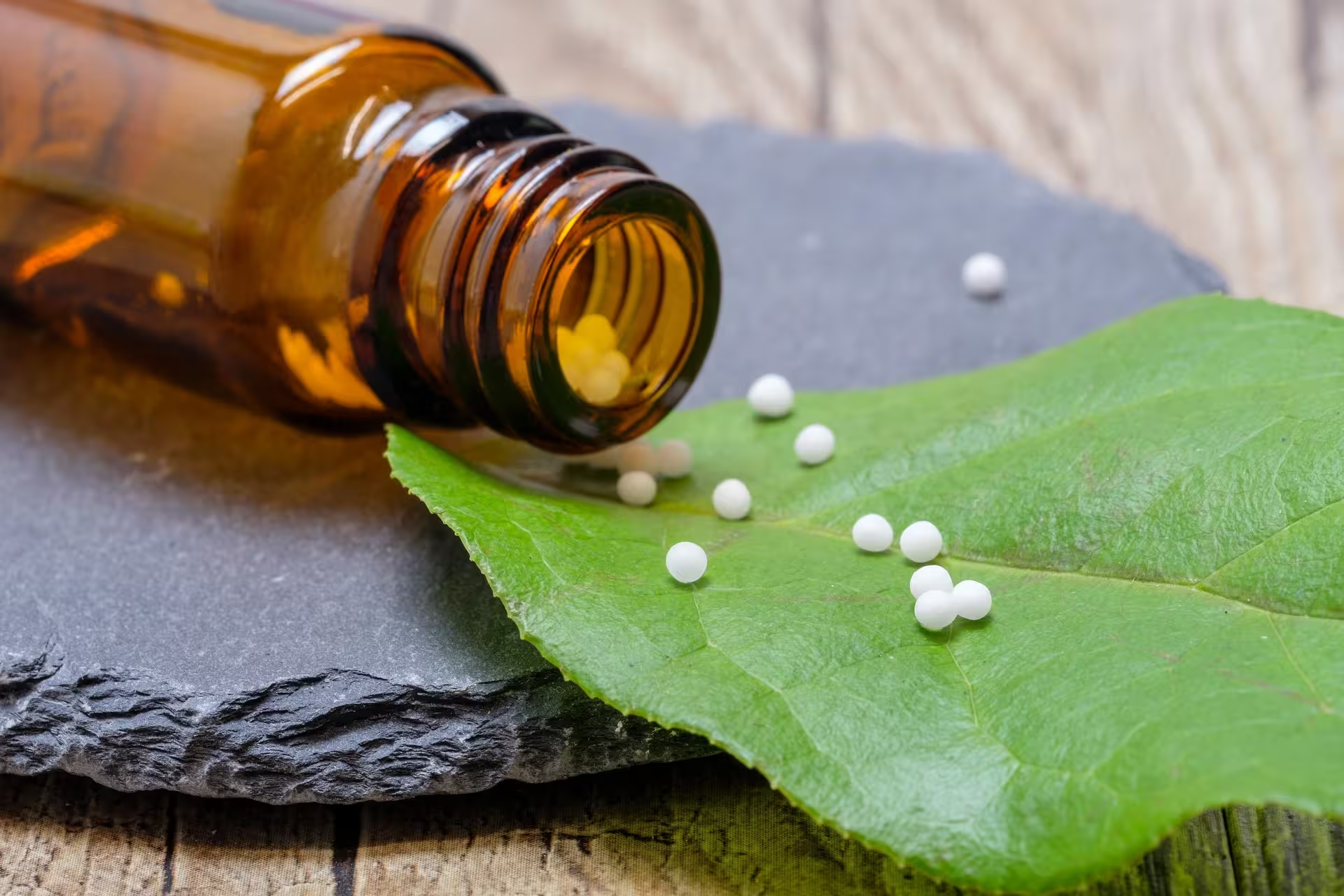
Homeopathy is a system of medicine that has been used worldwide for more than 200 years. Built upon the principle that the body possesses an inherent ability to heal and regulate itself, homeopathy seeks to support these natural processes through highly individualized remedies selected according to each person's unique symptom picture.
Unlike many approaches that focus primarily on the diagnosis, homeopathy places significant emphasis on the individual experiencing the condition. Two people with the same diagnosis may receive entirely different remedies based on their physical symptoms, emotional patterns, health history, and overall constitution.
Today, homeopathy remains one of the most widely utilized forms of complementary medicine worldwide and continues to play a particularly important role in European biological medicine, integrative medicine, and naturopathic practice.
Homeopathy was developed in the late eighteenth century by German physician Dr. Samuel Hahnemann. Dissatisfied with many of the medical practices of his day, Hahnemann began searching for a gentler and more systematic approach to treatment.
Through extensive experimentation, he developed the principle known as "Similia Similibus Curentur", or "Like Cures Like." This principle proposes that a substance capable of producing symptoms in a healthy person may, when prepared in a specific manner and administered in very small doses, help stimulate healing in someone experiencing a similar symptom pattern.
Over time, Hahnemann refined methods for preparing remedies through a process of serial dilution and succussion, creating what became the modern homeopathic pharmacopeia.
Homeopathy spread rapidly throughout Europe and North America during the nineteenth century and eventually evolved into multiple branches of practice, including classical constitutional homeopathy, clinical homeopathy, biological medicine, homotoxicology, isopathic medicine, and modern immunotherapeutic applications.
Perhaps no topic in medicine generates more curiosity—and debate—than the potential mechanisms behind homeopathy.
While the clinical use of homeopathy extends back more than two centuries, researchers continue to investigate how highly diluted remedies may exert biological effects. Several theories have emerged that attempt to explain observations seen in both laboratory studies and clinical practice.
One traditional explanation proposes that the preparation process imprints information from the original substance into the remedy.
This concept is sometimes referred to as the "water memory" hypothesis. According to this theory, the repeated dilution and succussion process may create persistent structural or electromagnetic changes within the solution that allow biological information to be retained even when little or none of the original material remains.
Supporters of this perspective often describe homeopathic remedies as carrying informational or frequency-based signals that interact with the body's regulatory systems rather than functioning through conventional biochemical pathways.
While these models remain areas of ongoing investigation and discussion, they are often used to explain the clinical observations reported by practitioners who view homeopathy through a bioenergetic framework.
A more recent scientific theory proposes that homeopathic preparation methods may result in the formation of biologically active nanoparticles originating from the source material and the manufacturing process itself.
Researchers investigating this possibility have identified nanoparticles and nano-sized structures within some homeopathic preparations. These findings have led to hypotheses that homeopathic remedies may function through nanopharmacological mechanisms capable of influencing cellular signaling pathways and adaptive responses.
From this perspective, remedies may not be functioning purely as energetic medicine, but rather as extremely low-dose biological signals capable of interacting with the body's complex regulatory networks.
While research into these mechanisms continues, both the energetic and nanoparticle models attempt to explain the same observation: that highly diluted preparations may exert effects beyond what would traditionally be expected from their concentration alone.
Classical homeopathy represents the form of homeopathy most closely aligned with the teachings of Samuel Hahnemann.
In classical practice, a single remedy is selected based upon the totality of the patient's symptoms and constitution. Rather than focusing exclusively on a particular diagnosis, practitioners evaluate the entire person, considering factors such as:
The goal is to identify a remedy that best matches the patient as a whole rather than simply matching a disease name.
Because every person's symptom picture is unique, remedy selection is highly individualized.
While classical homeopathy remains important, modern practitioners have expanded its applications significantly.
One area of development involves isopathic medicine, which utilizes preparations made from the same substance believed to be contributing to a patient's symptoms. Examples may include environmental exposures, allergens, microbial materials, molds, pollens, or other biological substances.
This approach has become especially popular within German biological medicine and electrodermal testing systems, where individualized remedies may be selected based on the patient's unique response patterns.
Modern homeopathic preparations are also commonly utilized within:
In recent decades, specialized homeopathic immunotherapies have also been developed that seek to support healthy immune regulation and adaptive responses through carefully prepared low-dose biological preparations.
These modern applications represent an evolution of traditional homeopathic principles while maintaining the core philosophy of stimulating the body's self-regulatory capacity.
Our practice utilizes both traditional homeopathic prescribing and modern biological medicine approaches, allowing treatment to be tailored to the individual and the clinical situation.
When appropriate, remedies are selected according to classical homeopathic principles, focusing on the patient's unique symptom picture, constitutional tendencies, and overall pattern of health. In these cases, finding the most appropriate remedy often involves looking beyond the diagnosis itself and understanding how the individual expresses illness.
At the same time, we also recognize that advances in biological medicine have expanded the ways homeopathic remedies can be utilized. Through electrodermal screening and individualized assessment, we may incorporate modern European preparations, including Sanum remedies and other biological medicines, when clinically appropriate.
One of the unique aspects of our practice is the incorporation of Sanum-Kehlbeck remedies within a broader terrain-focused approach to health.
Rather than viewing disease solely as the result of a specific pathogen or diagnosis, terrain medicine emphasizes the internal environment of the body. The question becomes not simply "What is causing the problem?" but also "Why is the body susceptible to this problem in the first place?"
Factors such as the microbiome, immune regulation, nutritional status, toxic burden, digestive health, stress physiology, and overall vitality all contribute to the body's terrain.
Sanum remedies are often used to support these regulatory processes and to encourage a healthier biological environment. Because terrain patterns differ from person to person, remedy selection is individualized and may be guided by electrodermal screening findings, clinical presentation, and overall treatment goals.
This allows homeopathy to be integrated into a broader naturopathic strategy aimed at improving resilience and restoring healthy physiological regulation.
Homeopathic treatment is highly individualized, which means there is no standard protocol that every patient receives.
Homeopathic remedies are easy to take, safe for everyone as they are diluted to infinitesimally small doses, and highly effective for the rapid, gentle treatment of disease, both acute and chronic. We combine them with other aspects of naturopathic care, including nutritional counseling, physical medicine, herbal medicine, and lifestyle recommendations.
Our goal is not to choose between classical homeopathy and modern biological medicine, but rather to draw from both traditions when appropriate. By combining the depth of individualized homeopathic prescribing with contemporary terrain-based approaches, we are able to develop treatment plans that are tailored to each patient's specific needs and health goals.